
Insights from SST-sponsored shooter John Vlieger
Ask a serious competitor what they look for in their match ammo, and you won’t get a vague answer. The shooters putting in the rounds and putting up the scores have very specific things they pay attention to, and most of them aren’t the things that show up in marketing copy.
We sat down with John Vlieger, SST-sponsored shooter and USPSA Open Division veteran, to talk through what actually matters to a competitive shooter when it comes to ammunition selection. The conversation covered everything from training logistics and travel constraints to skill progression and the traps new shooters fall into when chasing the cheapest box on the shelf.
Here’s what came out of it.
For most traveling competitors, the airline check-in counter is where the weight of your ammo becomes a real-world problem.
The FAA and most major U.S. airlines cap small arms ammunition at 5 kg (11 pounds) per passenger in checked baggage. For traveling shooters, that ceiling determines how many rounds you can legally bring to a match without shipping ammo ahead or buying local.
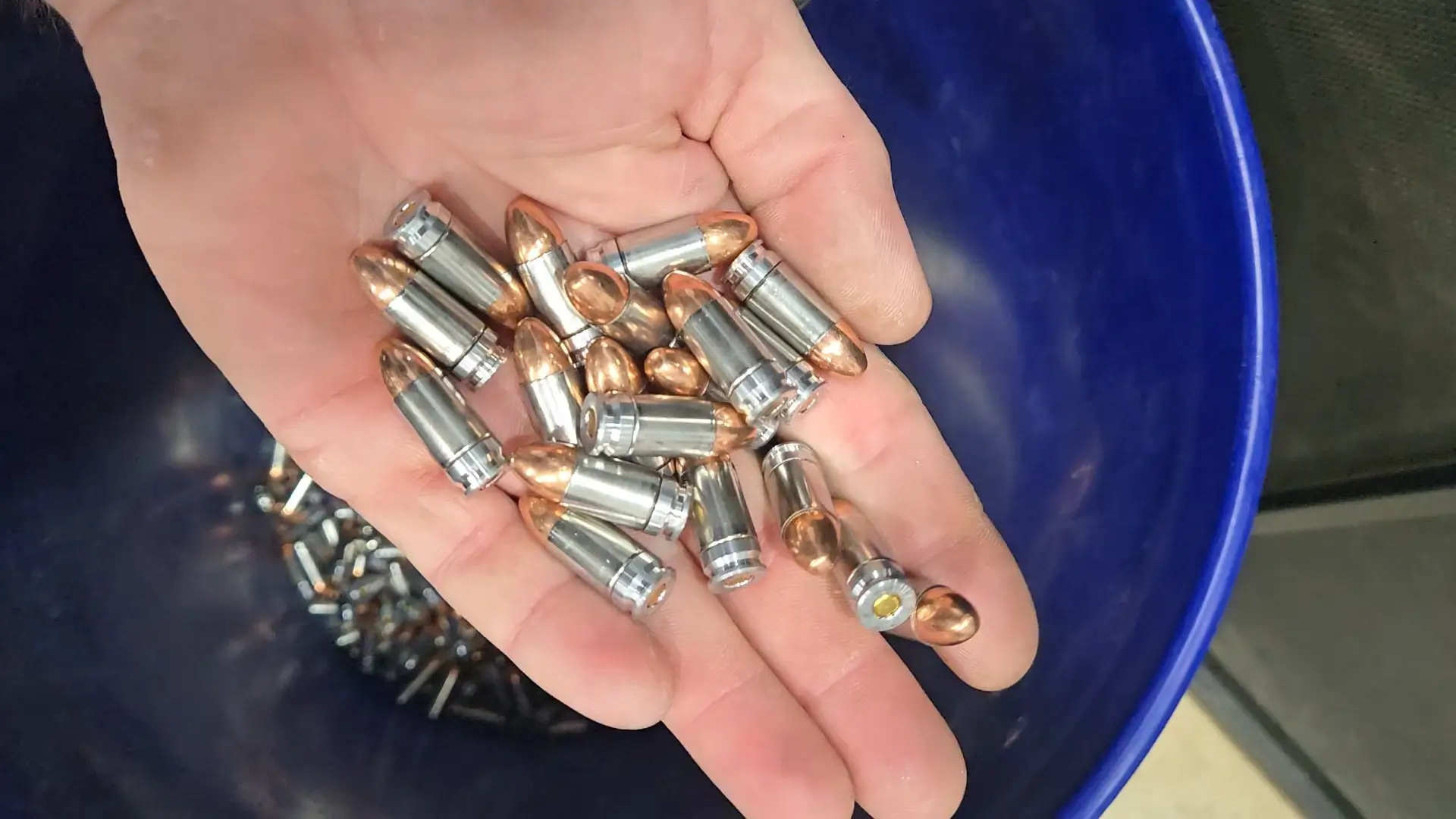
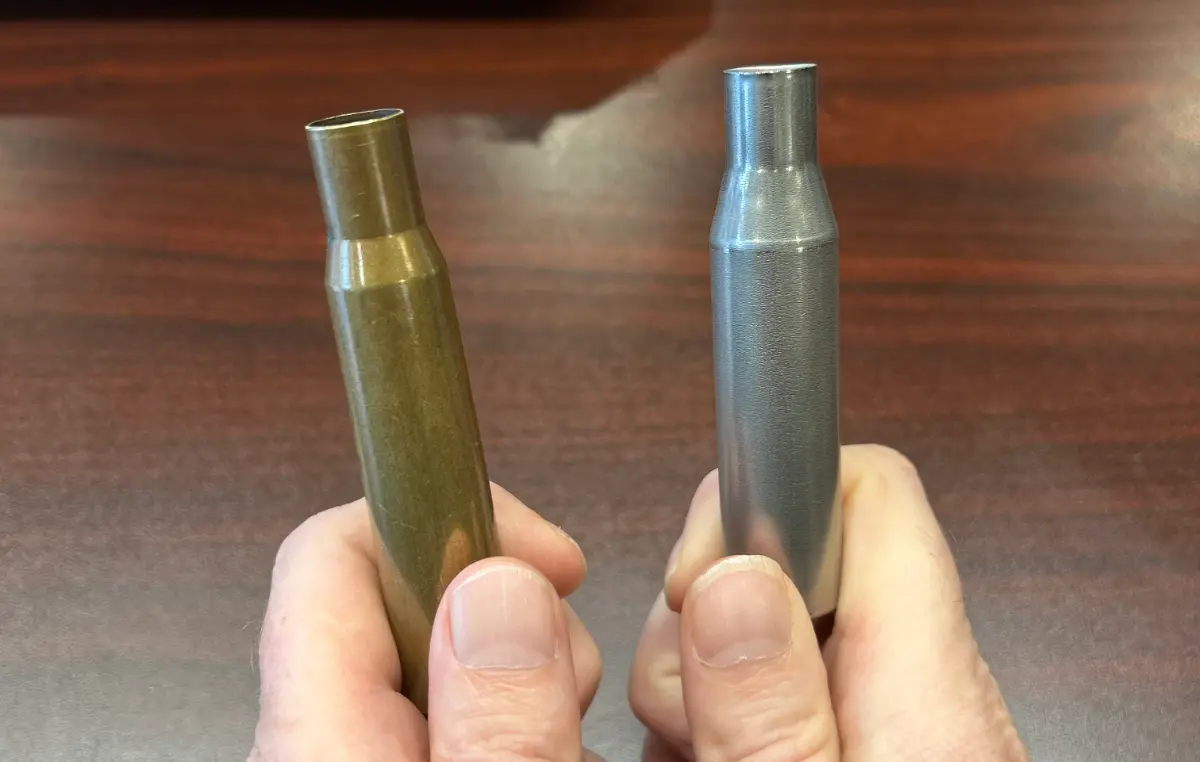
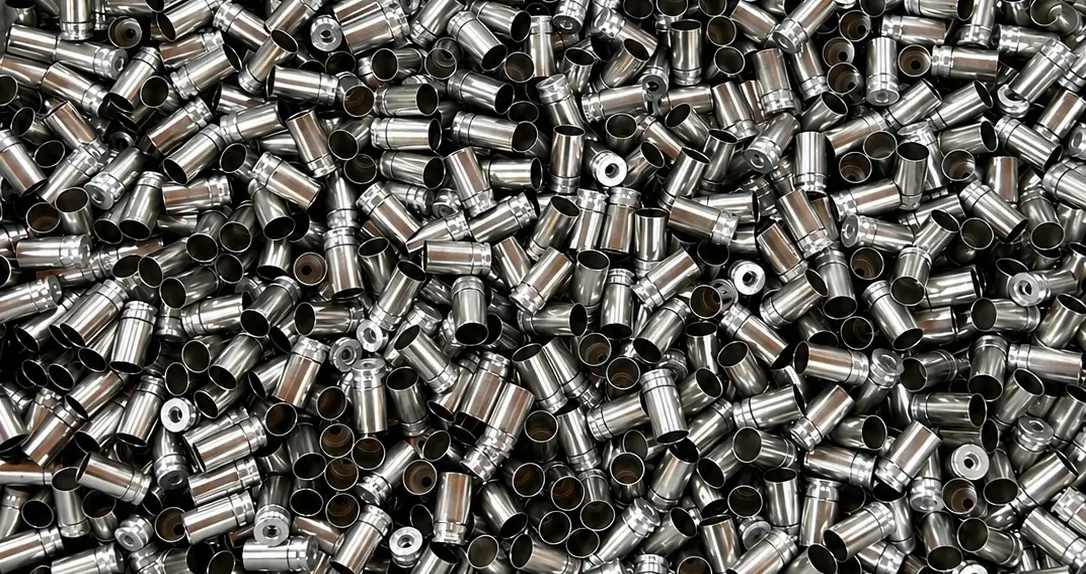
This is where Shell Shock Technologies’ NAS3™ cases shift the math. Because the cases are roughly half the weight of brass, you can fit substantially more loaded rounds under the same 11-pound limit. John’s estimate: somewhere in the neighborhood of 80 to 100 additional 9mm rounds compared to the same weight in brass-cased ammo.
For a major out-of-state match, where you want practice rounds, match rounds, and a comfortable backup supply, that’s a real, tangible benefit.
What is John paying attention to during his competitions when it comes to his ammo?
Consistency.
“The NAS3 cases eject much more consistently,” he explained. “You have a very consistent case, so it’s ejecting, first of all, usually going a little bit further, but it’s being very consistent.”
That consistency is also a diagnostic tool. When every case ejects to roughly the same spot, any deviation jumps out. If you start seeing the sprinkler effect – cases going every which way – it’s a signal that something is off with your magazine, extractor, or gun. With inconsistent brass, that signal gets buried in noise. With NAS3 cases, it’s hard to miss.
For a sport where equipment failure mid-stage can torpedo an entire match, having an early warning system built into your brass is no small thing.
That kind of round-to-round repeatability isn’t an accident. Shell Shock Technologies engineers NAS3 cases for uniform wall thickness and exact dimensions, which is what produces the predictable behavior John is describing. When every case is built to the same spec, the gun has the same conversation with every round it cycles.
We asked John what role ammo selection plays for shooters trying to move up from club-level competition.
His honest answer: at the beginning, it doesn’t matter much. Show up, shoot a lot, learn the fundamentals.
But the higher you climb, the more it matters.
“As you try to get better, it matters more. The more you’re trying to squeeze that last 1% to 3% of performance out is where you’re going to see the benefits.”
A concrete example John gave: the difference between a 115-grain and a 147-grain 9mm load when you’re working on doubles. A 115-grain load, in his experience, gets the recoil impulse over with faster; the dot pops up and comes back fast, making it easier to call and break a predictable second shot. A 147-grain load has more of what he called a “slow push,” drifting up and back down. Neither is wrong. But once you’re chasing single-digit splits and trying to shoot called pairs at speed, that recoil character starts mattering a lot.
Here’s the other side of consistency that doesn’t get talked about enough: the consistency of what you train with.
“Thirty thousand rounds of the same 115-grain is going to be better in your training than 10,000 rounds of three different types of ammo each.”
Every round you fire reinforces the same recoil pattern, the same point of impact, the same timing. Switching loads constantly means constantly recalibrating.
The budget and logistics side of ammo choice is, in many ways, the biggest practical benefit you’ll get from being intentional about what you shoot.
The new shooter’s instinct is to buy whatever is cheapest per round. John’s advice: Be careful with that, especially when the cheap option is remanufactured ammunition.
Remanufactured ammo uses fired brass that’s been picked up, inspected, resized, and reloaded. The price is attractive, sometimes a penny or two per round cheaper than new, but you’re inheriting two stacked QC risks: whatever the original manufacturer let through, plus whatever damage the case sustained during its previous life. Chewed-up or defective rims are a particular concern, and a bad rim is the kind of problem that shows up at the worst possible moment.
“The ammo needs to do its job first and foremost. That means it needs to go off, and it needs to be accurate. It needs to work, and it needs to work well. That should be your primary concern.”
The question to ask isn’t “how cheap can I get this?” It’s “What am I sacrificing for that cheaper price?” Quality within a reasonable price range – that’s the target. Diminishing returns kick in eventually, but the bottom of the market is not where the savings are real.
The things that actually move the needle in competitive shooting aren’t flashy. More rounds under your airline’s weight limit. Consistent ejection that doubles as a diagnostic. A load you trust enough to train with for tens of thousands of rounds. The discipline to not gamble your match on bargain-bin remanufactured ammo.
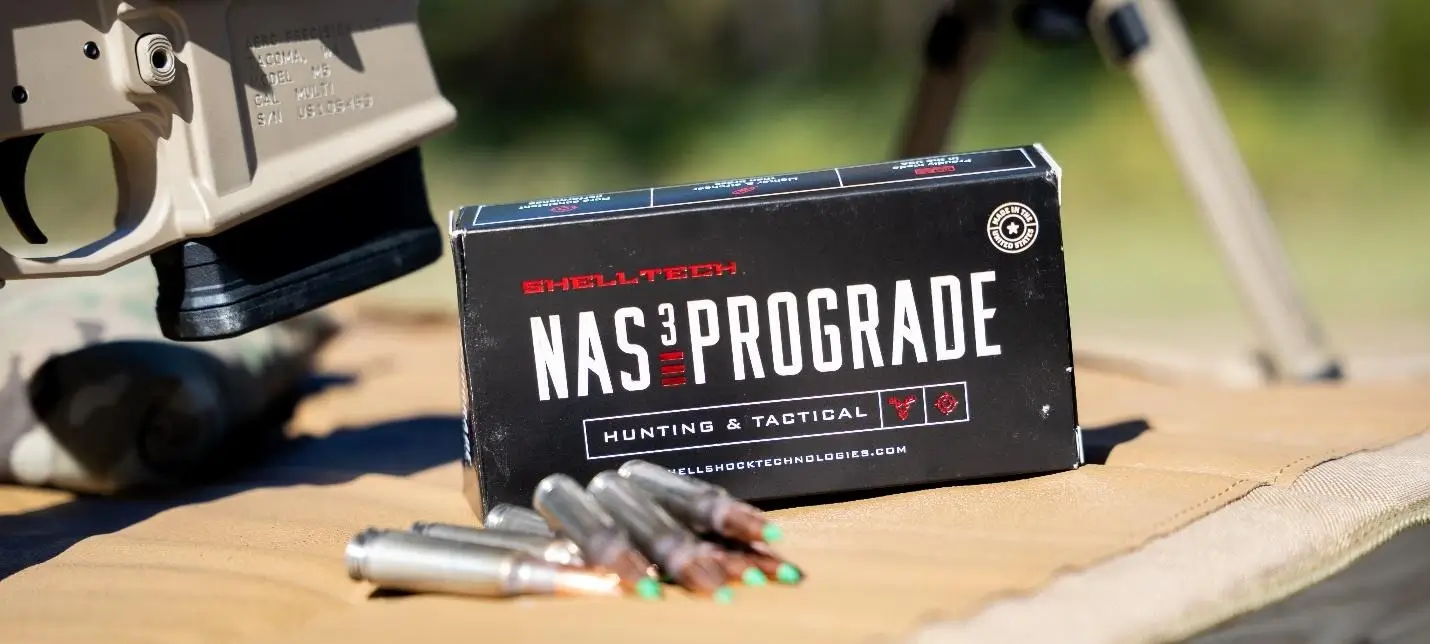
That’s the working philosophy. Find ammo that does its job – reliably, accurately, consistently – and then commit to it. The shooters squeezing out that last 1% to 3% of performance aren’t doing it by accident. They’re doing it by paying attention to the things most shooters overlook. For shooters who want a casing built around those same principles, Shell Shock Technologies’ NAS3 cases are available in 9mm, .380 ACP, 5.56 NATO, 300 Blackout, 338 Lapua, and .308, with loaded Shell Tech™ ammunition available across the popular calibers.
—
*John Vlieger is a Shell Shock Technologies-sponsored shooter competing in USPSA Open, Carry Optics, and Limited Optics Divisions.